welcome to the personalization paradox
If you feel like you're running faster just to stay in the same place with your outbound, you're not imagining things. You're living through the new normal.
Response rates have plummeted to less than 1% across the board. Your team is likely spending less than a third of their time actively selling, with the rest consumed by administrative tasks that continue to grow each year.
The very AI tools that promised to make outreach personal have backfired. They've created a "personalization paradox", where the attempt to scale connection has only flooded inboxes with messages that feel more artificial and easier to ignore than ever.
This isn't a slump. It's a systemic breakdown.
The old playbooks are officially dead. The noise is deafening, the costs are spiraling, and the frustration is completely valid. You're not just fighting for attention; you're fighting a broken system.
But the problem isn't that outbound no longer works. Cold email isn't a volume game anymore. It's a relevance game. The real opportunity lies in leveraging AI to amplify human connection with hyper-relevant insights, not replace it.
In the next section, we'll dissect the three specific models that are leaking cash and killing morale in sales organizations right now. I'll show you exactly why they're broken, so you can finally see the path to a better way.
Why your current approach is leaking cash and killing morale
The brutal truth is that most outbound strategies fail before the first email is even sent. They fail because they are built on one of three fundamentally broken models.
If you've tried any of these, the frustration you feel is not your fault. It's the model that was flawed from the start.
Model 1: The high-cost in-house team
This is the default for many companies. You hire one, two, maybe three Sales Development Reps (SDRs), believing that full control is the best path to success. But the numbers tell a different story.
SDRs are paid handsomely when you factor in salary, benefits, and tools. A small team quickly becomes a significant investment. Worse, ramp-up time for a new SDR often takes six to nine months before they become fully productive. Studies show reps spend a mere 28% of their week actively selling, with 30% devoted just to figuring out which accounts to target. The rest is lost to admin tasks and manual research.
This model is why so many leaders feel like they're burning cash to acquire customers at a cost that makes their eyes water. It's a slow, expensive, and fragile way to build a pipeline.
Model 2: The black-box agency
When the in-house model proves too costly, outsourcing seems like a logical step. You sign a contract with a lead generation agency for a monthly retainer. They promise a flood of qualified meetings and a hands-off experience.
The reality is often disappointing. Studies show manually built lists yield five times more closed-won deals than purchased ones. You typically receive low-quality, non-exclusive leads that have been sold to multiple companies and bombarded with similar pitches.
You lose control over your messaging and risk damage to your sender reputation from generic, templated outreach that lacks human touch. This "cookie-cutter" approach addresses the symptom (an empty pipeline) but ignores the disease (a poor, undifferentiated strategy).
Model 3: The "robotic" AI outreach
The latest siren song is the promise of infinite scale through AI. The logic seems seductive: more emails sent automatically must equal more responses. But this approach ignores a critical reality. Your prospects' inboxes are not a math problem; they are a human filter.
First-generation AI tools often generate robotic "feature dumps" and gimmicky subject lines that sophisticated buyers immediately recognize and ignore. Smart AI should amplify human connection, not replace it. It should handle research and personalization while you focus on building relationships.
What works instead is using AI as your assistant for hyper-personalization at scale. AI-assisted research with human-written copy crafts messages that sound genuinely human based on specific details about prospects' roles, activities, and pain points. Always add your unique voice before sending, and implement a multi-channel strategy that includes LinkedIn engagement and other touchpoints.
Each of these models, the expensive team, the generic agency, and the robotic AI, shares the same fatal flaw. They all assume that lead generation is a volume game. It's not. It never was. The market has shifted, and a new approach is required. One that replaces volume with precision, and automation with intelligence.
Stop shouting louder. Start getting sharper.
After seeing the expensive, ineffective, and outdated models, it's easy to think the solution is just a slightly better version of the same thing. A cheaper SDR. A more honest agency. A smarter AI tool. But that's a trap. It keeps you focused on the wrong problem.
The most dangerous misconception in the market is believing your problem is lead generation. It's not. Your problem is a fundamental mismatch between your message, your targeting, and your prospect's reality. You're trying to solve a strategy problem with a volume tool.
The market doesn't reward those who shout the loudest; it rewards those who are the sharpest. It rewards a psychology-first approach that respects where a buyer is in their journey and what they truly care about right now. It's about precision, not pressure.
Three actionable shifts to implement now:
- Deeply define your ICP beyond basics. Include tech stack, business challenges, buying triggers, and decision-making processes.
- Leverage social signals for intent. Monitor prospects engaging with content from thought leaders or competitors in your niche.
- Implement multi-channel orchestration. Combine email, LinkedIn engagement, and calls in a strategic sequence.
This shift changes everything. When you stop chasing more leads and start focusing on having the right conversation with the right person at the right time, you escape the cycle of noise and wasted effort for good. Now, let's bridge the gap from strategy to action.
Test drive the methodology: diagnose a prospect's awareness now
Strategy is useless without action. Put my methodology to the test right now with the same tool I use to diagnose a prospect's real buying mindset. Then, grab the other assets to build your own campaigns.
The 'awareness level' diagnoser
The real problem isn't a lack of leads. It's the critical mismatch between your message and your prospect's current state of mind. This tool solves that problem at the source. Instead of guessing, you can programmatically diagnose their position in the buyer's journey using social signals and intent data, allowing you to deploy the right angle every time.
Your diagnosis will appear here.
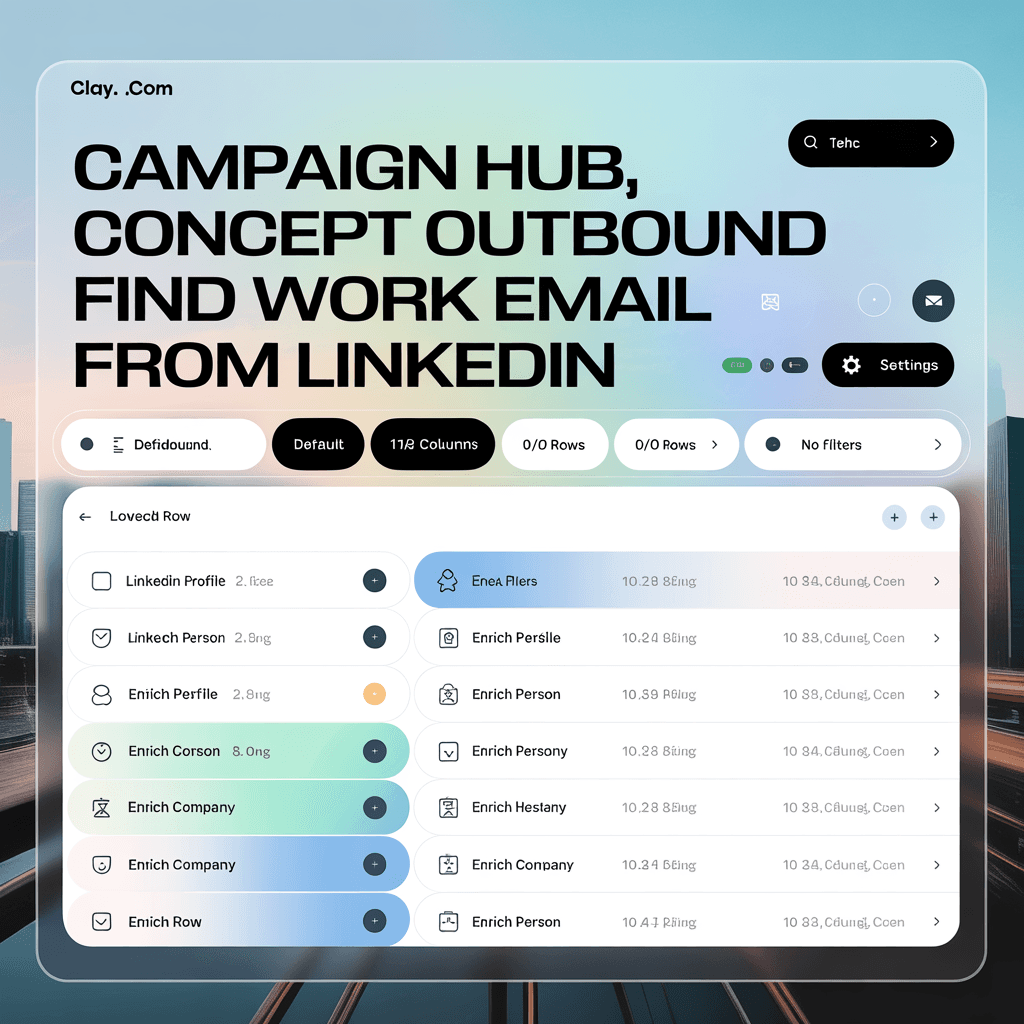
The pre-built 'Campaign Hub' Clay table template
This Clay table isn't just a blueprint for a fourth model. It's the operational foundation for an outbound approach built around relevance instead of volume. It enables you to leverage intent signals and digital breadcrumbs that indicate buying readiness, allowing your team to focus on prospects most likely to convert. By integrating AI for hyper-personalization, it helps craft messages that reference specific contextual details from prospect data, making your outreach impossible to ignore.
The personalization prompt library
To escape the "personalization paradox," your AI needs to do more than just insert a name and company. It needs to generate specific insights that prove you've done your homework. This library contains battle-tested prompts that transform generic AI into a research assistant.
Your new outbound motion: the path to predictable pipeline
You now have the strategic framework and the core assets to build an outbound motion that is sharper, more intelligent, and fundamentally more effective than the competition.
I've walked through the personalization paradox, dismantled the three broken models that burn cash and morale, and reframed the core problem around strategy and relevance, not just lead volume. The implementation kit in your hands is the tangible starting point for putting that new, data-driven strategy to work.
This isn't about working harder. It's about working smarter. By leveraging cutting-edge technology to achieve a human touch at scale, you ensure every message counts.
Here's why this integrated approach gives you an unfair advantage:
- Precision targeting & hyper-relevance. Instead of casting a wide net, you'll employ "sniper focus" with real-time social signals and intent data, allowing your messaging to immediately speak to pain points.
- Scale without compromise. The prompt library empowers your AI to generate relevant insights that prove you've done your homework, automating research while freeing your team to focus on relationship building.
- Tangible results. This shift from volume to precision can deliver higher response rates during signal spikes, more calls in less time, and a stronger ROI compared to traditional approaches.
Imagine your pipeline no longer being a source of anxiety, but a predictable, well-oiled machine. Imagine your team having sharper, more intelligent conversations because they're empowered by relevance, not just volume. This isn't just a different way to do outbound. It's a path to regain control.
If you're ready to build that system, the next step is a 30-minute call.
I'll map out your first campaign and show you how to turn theory into pipeline.